Professor Lawrence Kramer published his most recent book, Experience: A History (University of California Press), in October of this year. Within this book, Kramer is questioning a phenomenon of human life that we often accept as intrinsic: experience. He was inspired to research this topic after wondering how experiences can change our lives and asking “What made experience something to ‘have’ and something to seek? How do we recognize it? Who can have access to it? How can we tell the difference between experiences we can trust and those we can’t?” Through researching and writing this book, Kramer found that, “answering questions like these begins with the realization that experience actually has a history in the first place. It is not an inherent feature of human life; it has not always been valued; it has undergone numerous changes over time.”
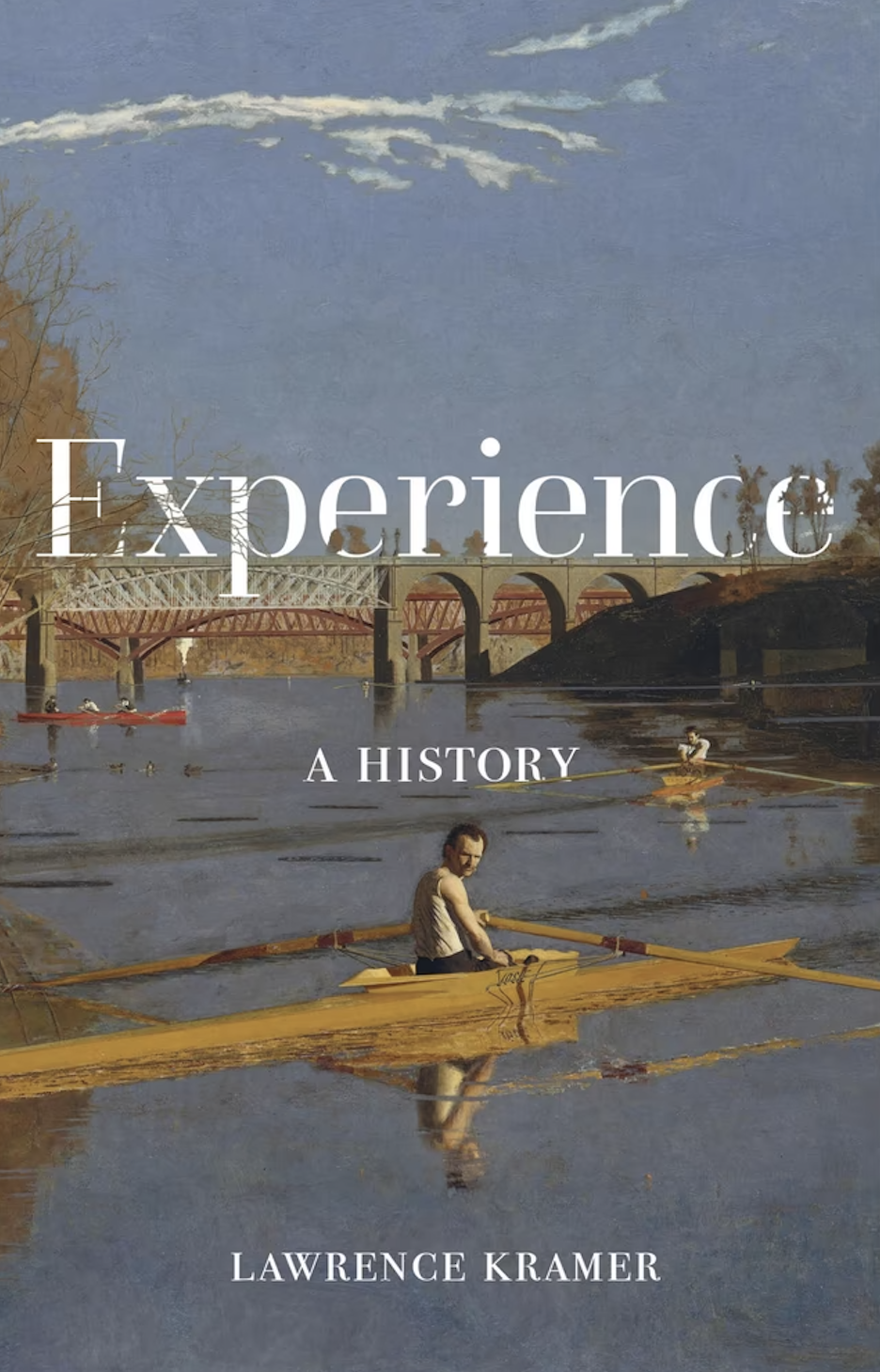
With the talent of being a trained composer under his belt, Kramer was led to this work through sound itself. After working on his 2019 book that questioned how sound and experience work together, The Hum of the World, he could not help but question the very notion of experience. In order to answer this question and map out a history of experience, Kramer turns to “literature, art, and music to see how experience has been imagined and expressed in the Western world” and “philosophy to see how it has been conceived.” However, within the book, Kramer is not only presenting a historical survey of experience but beautifully weaves in his own relationship to experience and aesthetics to personalize the drive to seek experiences. In Kramer’s own words, “The book makes this point by evolving from a wide-ranging history to a concluding memoir that could not have been written without the study that precedes it.”
When asked what his biggest take away from this research was that “I now have an idea of experience.” This text is asking readers to think of experiences as something that has been shaped by humans, and not something that is inherently given to us. Kramer says, “One might even say that experience itself is as much a question as it is an event. I've come to see experience as I now think it should be seen, as something strange and changeable and often enigmatic.”
To Kramer, the attitude that should be taken away from this book is growing increasingly important in light of the “crisis of credibility affecting the humanities both in higher education and the world at large.” He calls the attitude he is discussing “historical humility.” “It stems,” he explains, “from the understanding that we are who we are because of the way others have been who they were before us. Experience is a kind of legacy. We're responsible for it. And to meet that responsibility we have to steep ourselves in the cultural and artistic and conceptual record, the very thing that the humanities is supposed to do and foster.” In this AI driven time, he says that “the key question is not if we can have experiences. The question is whether we can keep them.”
Although the book is already published, for Professor Kramer this project isn’t over. His next project is to translate the concept of experience that he found through researching this topic into a form of musical expression.