A Semester of Innovative Scholarship and Academic Community in the “New Theories in Black Studies” Graduate Course and Speaker Series
Fordham English’s Assistant Professor Sasha Ann Panaram designed the graduate course “New Theories in Black Studies” to expose students to the rapidly flourishing and changing field of Black Literary and Cultural Studies. “New Theories in Black Studies,” the first graduate course taught by Prof Panaram, took place this past Spring semester, and centered on nine recently published theoretical monographs and one film that challenge traditional forms of scholarship and move the field forward into ever-developing methodologies, theoretical approaches, and critical interests. Each monograph read within the course was paired with a field-defining text by a writer at the foundation of Black Studies. For example, We Pursue Our Magic: A Spiritual History of Black Feminism (2023), by Marina Magliore, was read in tandem with Audre Lorde’s essay “Poetry is Not a Luxury” (1977) and I. Augustus Durham’s Stay Black and Die: On Melancholy and Genius (2023) was paired with Hortense J. Spiller’s “Mama’s Baby, Papa’s Maybe: An American Grammar Book” (1987). As part of their critical work within the course, students were tasked with articulating the relationship between these foundational and more contemporary works.
Along with being an interdisciplinary scholarly field, Black Studies is also always a lived practice. To further explore the ideas of their reading in broader contexts outside of the classroom, Professor Panaram also took the students on field trips to the Dark Laboratory at Hunter College and the Studio Museum in Harlem, both organizations working at the intersections of art, activism, and scholarship.
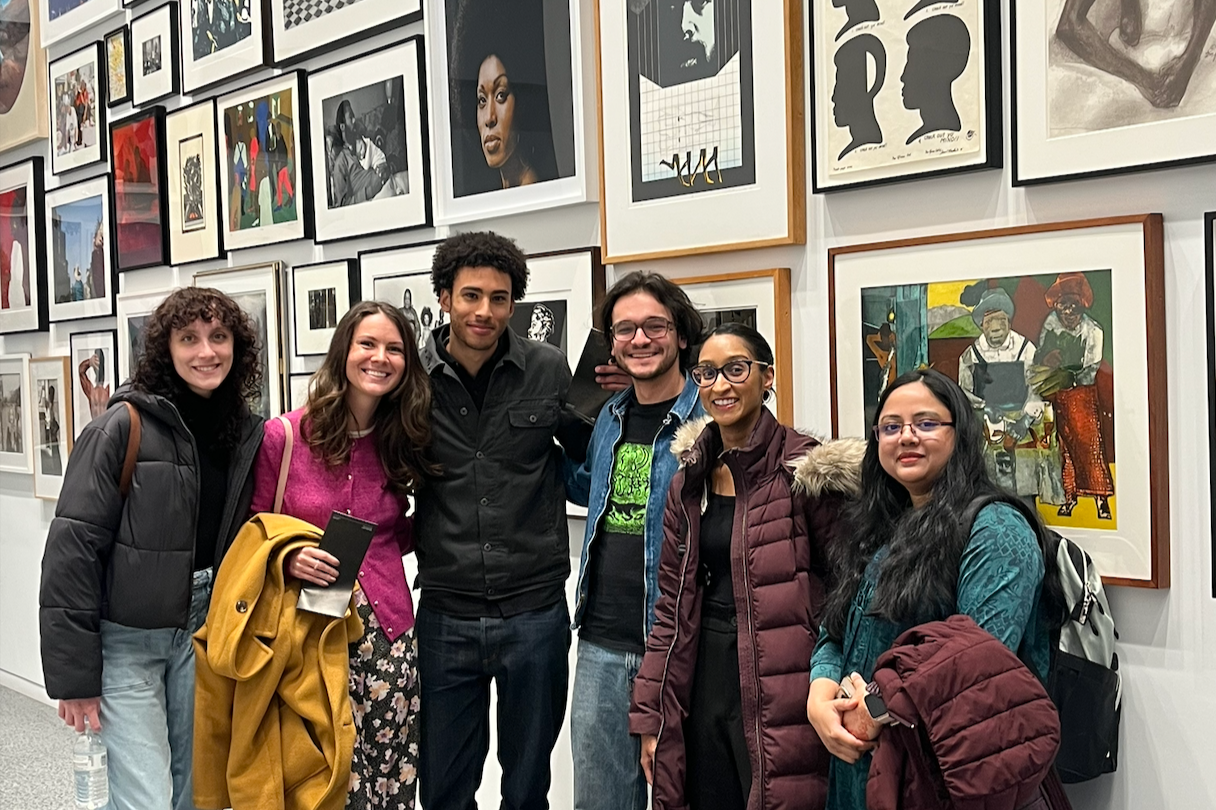
Prof Panaram and students during their visit to the Studio Museum in Harlem
The class’s ability to directly engage with the scholar-activists behind the core texts of the course was greatly expanded by the New Theories in Black Studies Speaker Series, which ran in tandem with the subject throughout the semester. This Series—funded by the English Department, Center for Community Engaged Learning, and GSAS’s Course Enrichment Fund—brought five of the authors whose texts were included in the course to Fordham University to speak with Professor Panaram and the class, along with other interested community members at the university. The guests—Imani Owens (Rutgers University), I. Augustus Durham (University of Toronto), Petal Samuel (UNC-CH), Jess A. Goldberg (New Mexico Highlands University), and Tao Leigh Goffe (Hunter College)—at first engaged in a dialogue with Prof Panaram for around an hour before taking further questions from other students and scholars.
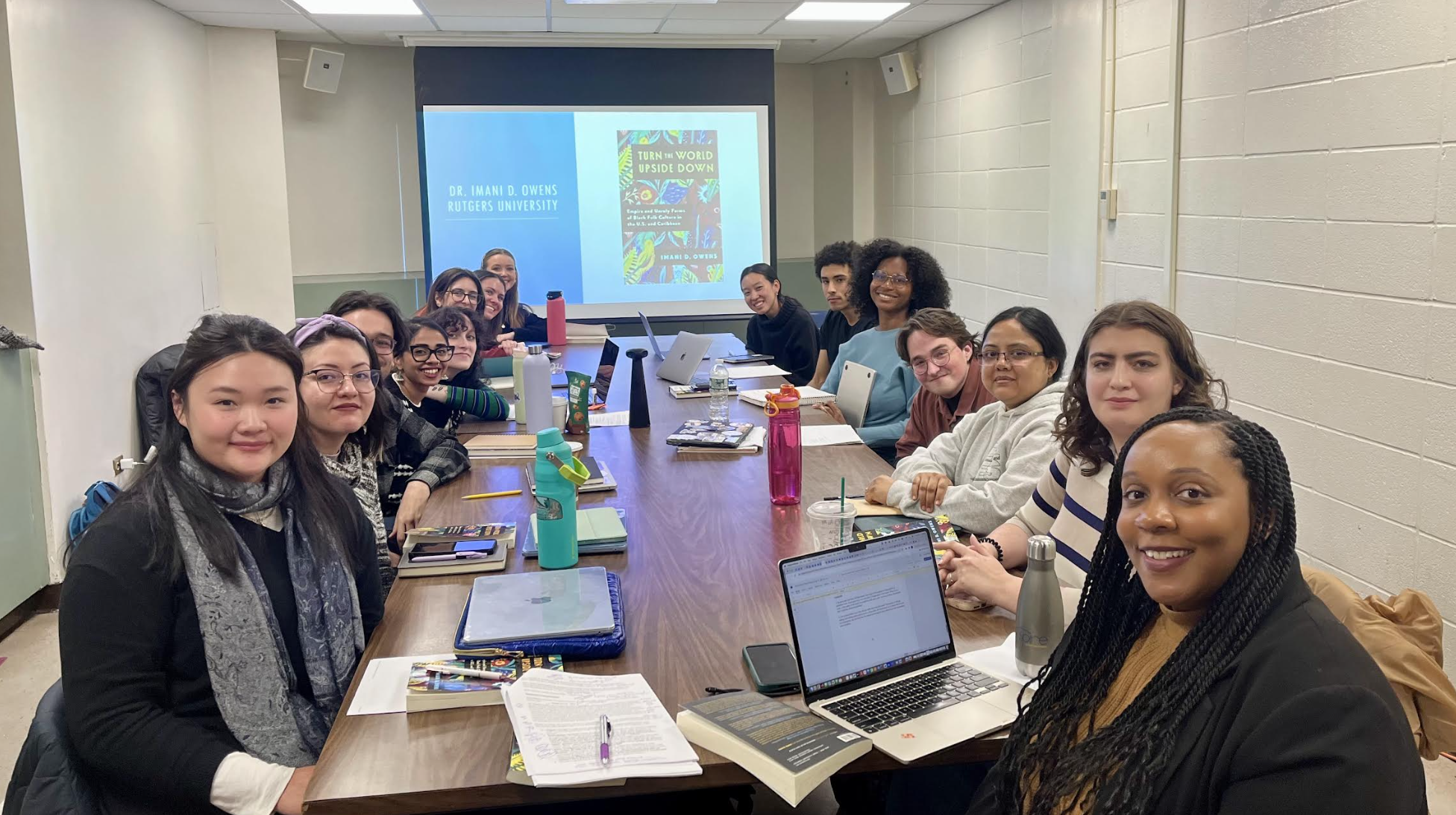
“New Theories” students with Prof Imani D. Owens during her Speaker Series visit
The speakers described the originating sparks of their projects, ranging from childhood experiences, to texts read during their PhD comprehensive exams, and intriguing critical questions like those surrounding archival silence, central to Prof Petal Samuel’s work in sound studies and Black Caribbean literature. They provided insight on the intersection between Black Studies and the other scholarly fields in which they work, including the need to navigate within and around the influence of canonical white authors. Prof I. Augustus Durham, whose work deeply engages with psychoanalysis and concepts of genius, explained how Sigmund Freud’s theories, though enduring, cannot fully account for the experiences of Blackness. In response to this, Durham acknowledges these influential texts to establish his expertise on their scholarship while also writing past them, manoeuvring the field to integrate his own critical perspective.
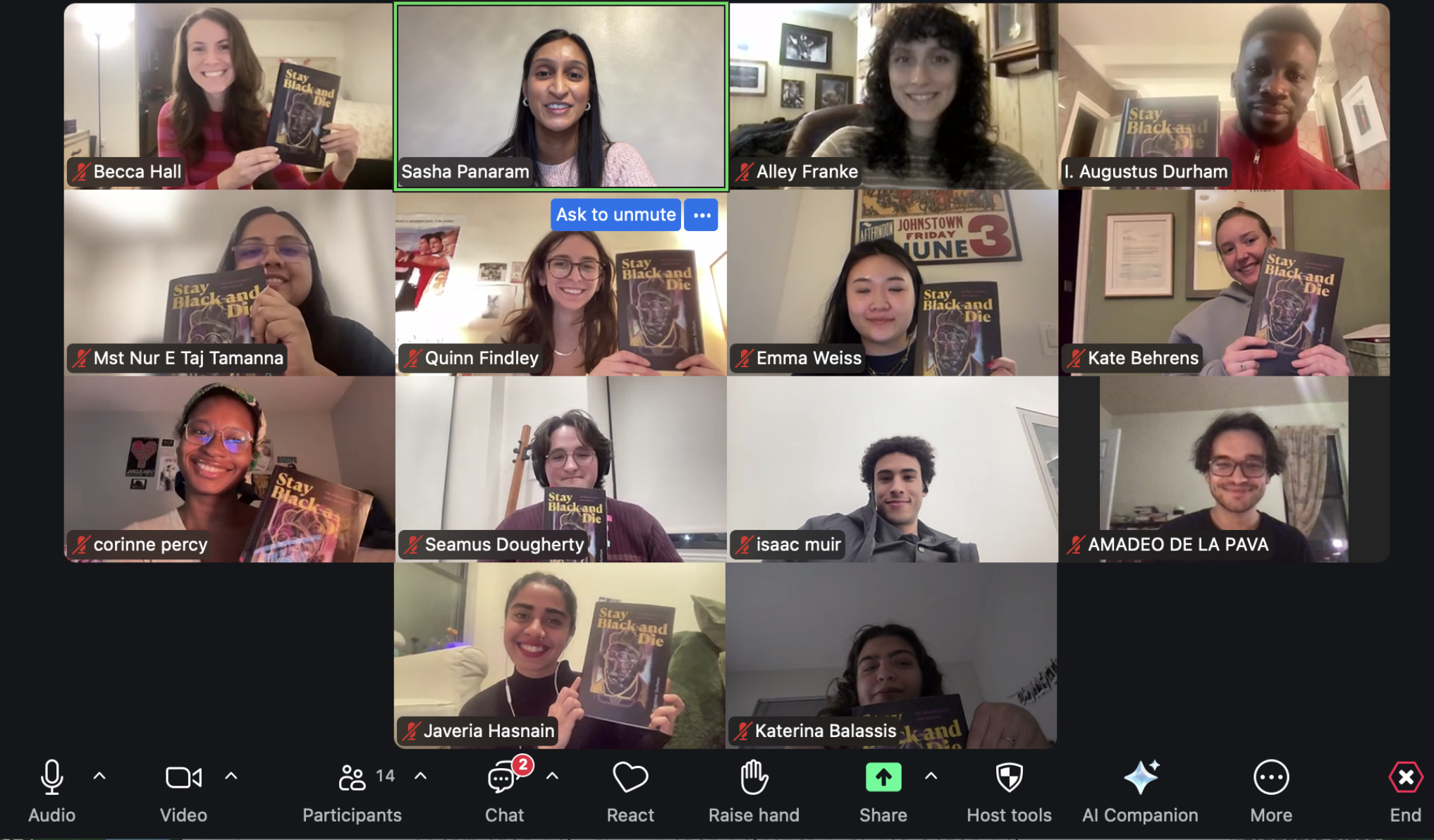
Prof I. Augustus Durham speaks to the class about Stay Black and Die (2023) via Zoom
Throughout the Speaker Series, the works of a wide range of Black writers, activists, and creators were referenced by the guest speakers, from the establishing voices of Frederick Douglass and Olaudah Equiano, 20th-century giants like James Baldwin and Octavia E. Butler, and contemporary media like the music of Kendrick Lamar and Ryan Coogler’s film Sinners (2025). The speakers discussed the future of Black Studies, including the importance of centering a Black interior world, aliveness over death, and the speculative possibilities of world-building. The intersection of scholarship, lived praxis, and activism inherent within Black Studies became clear as the speakers discussed their processes for developing their projects. As a core practice, their critical interests and theoretical interventions were integrated with personal and political impetus and then integrated into insightful and generative interdisciplinary scholarship.
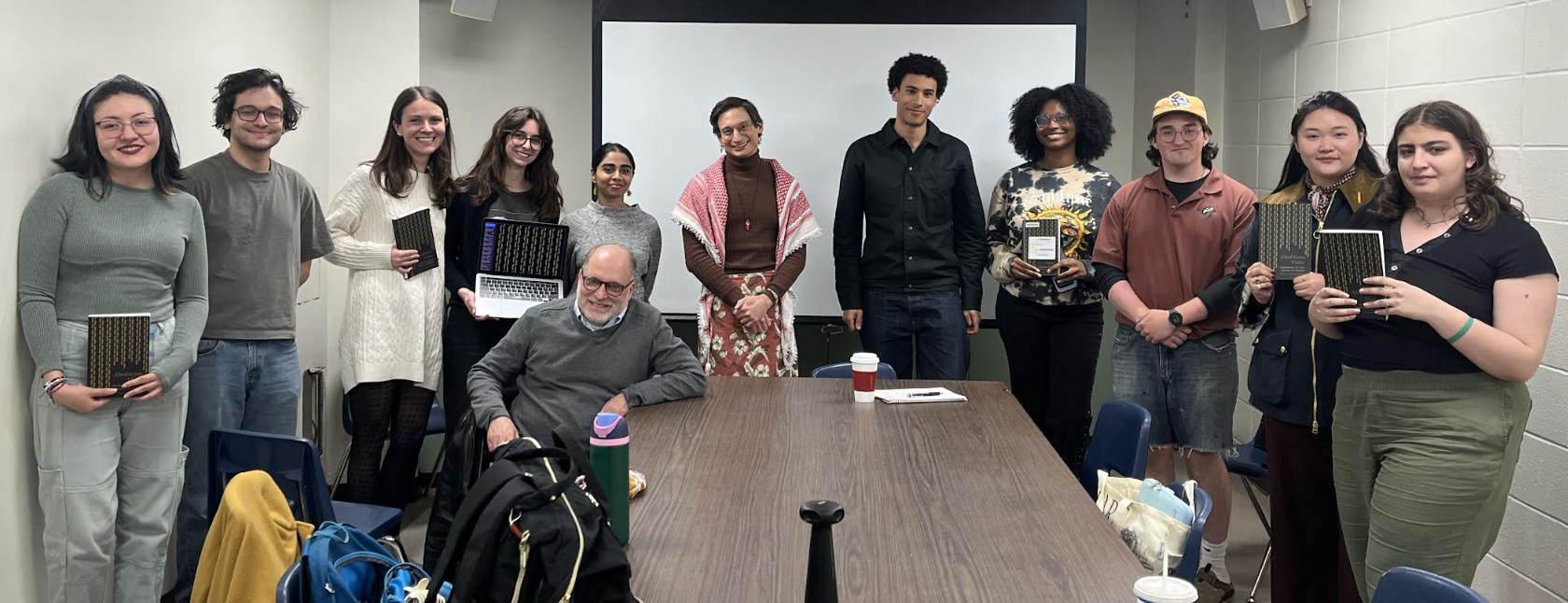
Prof Jess Goldberg joins the class to discuss Abolition Time (2024)
The dialogue between the speakers and Prof Panaram was followed by a series of questions from enthusiastic students, whose inquiries and thoughts about the texts they had read could now be personally responded to by the authors. In a reflection on this experience, Roxana Cuevas Cruz, a 2nd-year PhD student in the course, commented that: “The community-engaged aspect of the course, through the Speaker Series, helped us as graduate students better understand the importance of building community within academic spaces. Having the opportunity to interact with young, successful, innovative, and published scholars during class gave us the chance not only to ask questions about the theoretical side of their work, but also to learn more about the process of developing projects and ideas into full-length books, as well as about life in academia more broadly.” Fellow PhD student Amadeo de la Pava felt similarly, writing that himself and the other students were now “uniquely versed in not only the historical Black Studies but a diverse selection of recent approaches” and that because of the “intellectual generosity of Prof Panaram and visiting scholars” they are “now equipped to speak to the field's larger trends and emerging themes.” He found the experience of the course and Speaker Series to have been a “profoundly affecting experience of intellectual community and critical thought.” Being a graduate student and thinking about the future can be nerve-wracking, but the opportunity to learn and interact with a range of early career scholars is not only thought-provoking but encouraging, highlighting the importance of these occasions even for students who will continue their research outside of the field of Black Studies.
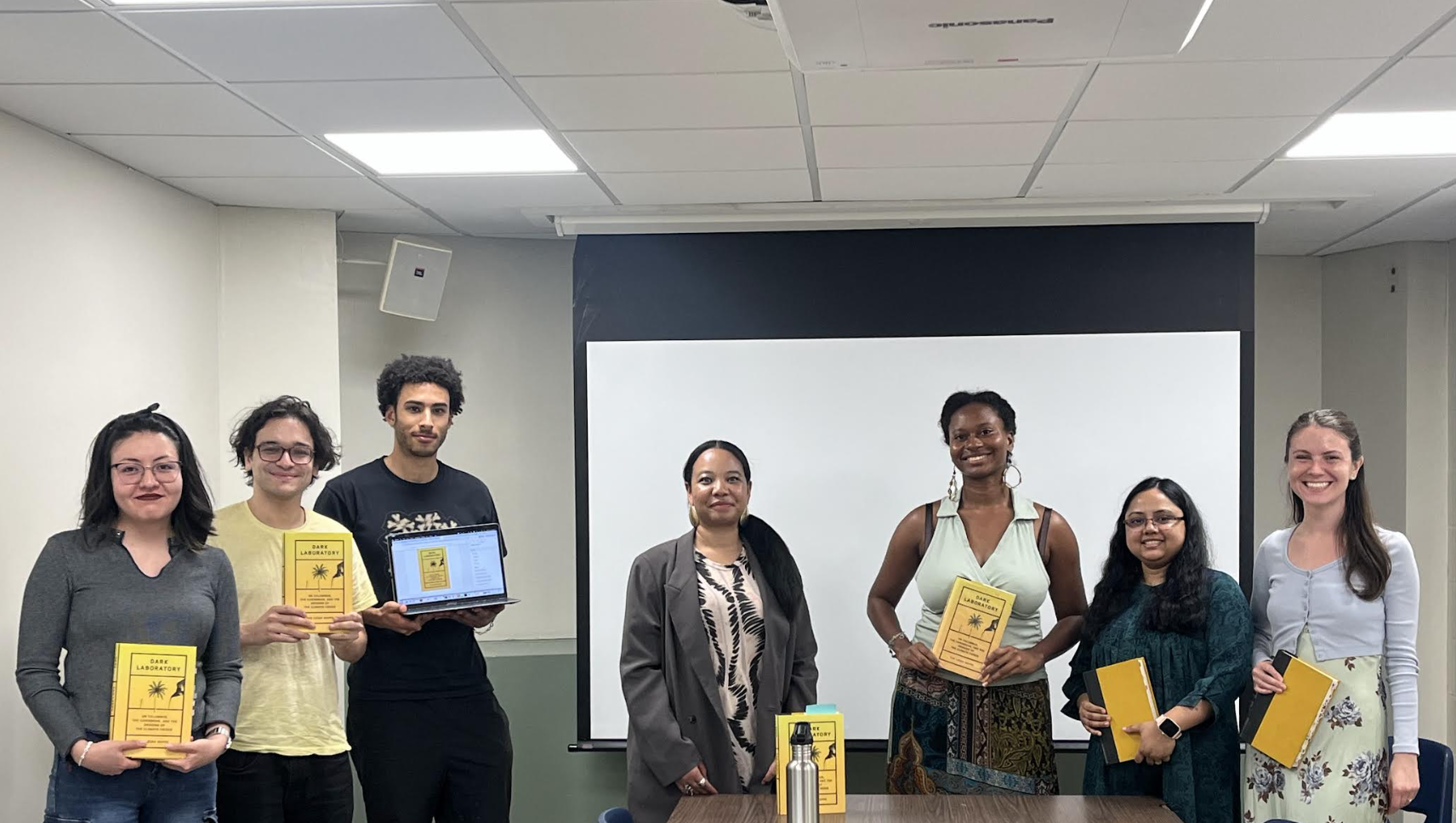
Prof Tao Leigh Goffe and students with their copies of Dark Laboratory (2025)
Through this integration of community and academic insight, “New Theories in Black Studies” and its associated Speaker Series demonstrated the abundant possibilities of contemporary and innovative scholarship and teaching, a combination that Professor Panaram will undoubtedly bring to her future courses.
The Writers and Texts of “New Theories in Black Studies,” for further reading:
We Pursue Our Magic: A Spiritual History of Black Feminism, Marina Magloire (2023)
Feelin: Creative Practice, Pleasure, and Black Feminist Thought, Bettina Judd (2022)
Turn the World Upside Down: Empire and Unruly Forms of Black Folk Culture in the United States and the Caribbean, Imani Owens (2023)
Stay Black and Die: On Melancholy and Genius, I. Augustus Durham (2023)
Inhabitants of the Deep: The Blueness of Blackness, Jonathan Howard (2025)
The Quiet Zone: Caribbean Expressive Cultures and the Feminist Aesthetics of Disturbance, Petal Samuel (2026)
Dark Laboratory, Tao Leigh Goffe (2025)
Abolition Time, Jess Goldberg (2024)
Of Black Study, Joshua Myers (2023)
BLKNWS: Terms and Conditions, Kahlil Joseph (2025)
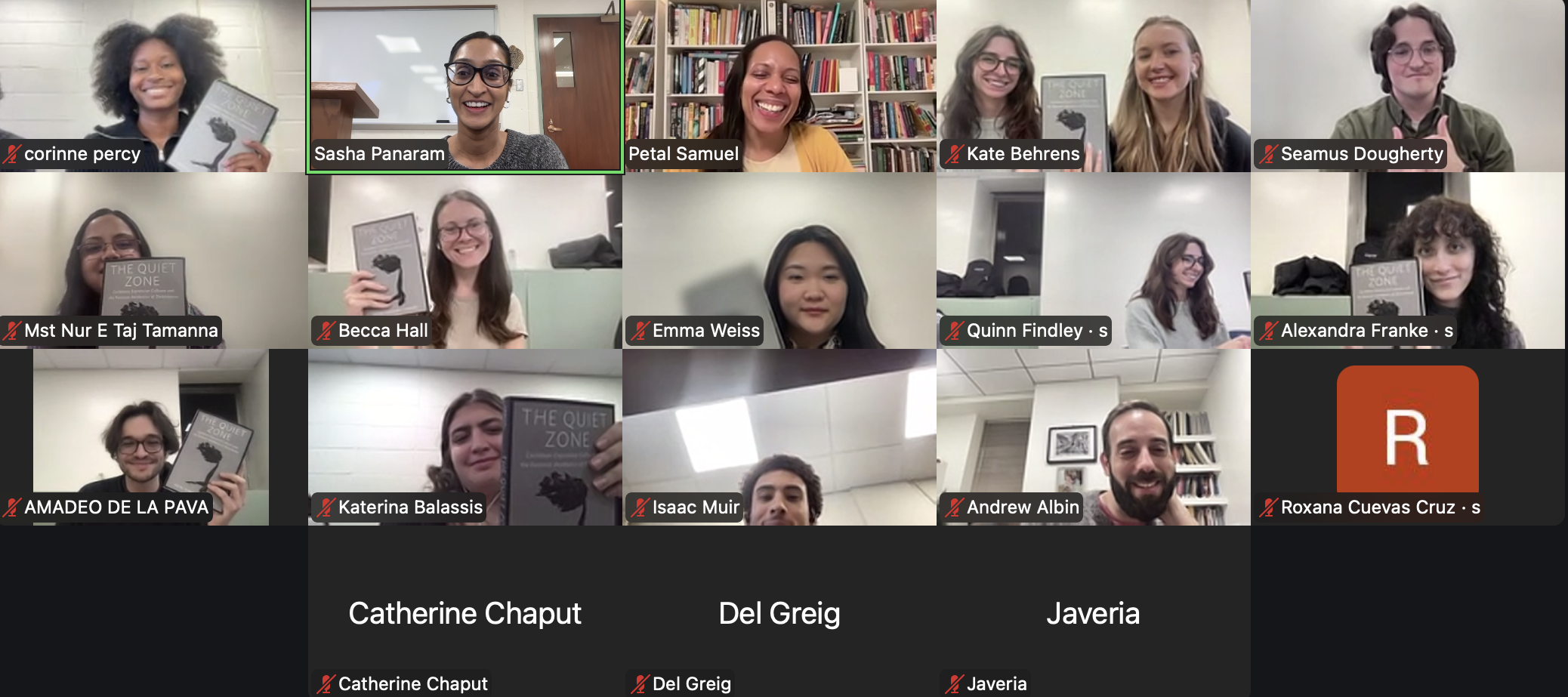
Prof Petal Samuel during her guest lecture, with “Black Studies” students and other members of the Fordham English community