José Olivarez on the Role of the Poet Today
By Allison Schneider
On Wednesday, April 29, members of the Fordham English community gathered in Pope Auditorium at the Lincoln Center campus to celebrate this year’s annual Reid Writer of Color, poet and author José Olivarez. Since 2008, the Reid Writers of Color Reading Series has brought some of the most celebrated writers of color to Fordham, and the English Department is proud to add Olivarez to that list. The series is made possible by the generous sponsorship of the Reid family.
Professor Stacey D’Erasmo, co-director of the Creative Writing Program, began the event by introducing Olivarez to the audience and welcoming him to the stage.
José Olivarez is the son of Mexican immigrants and the author of two collections of poems, including, most recently, Promises of Gold, which was long-listed for the 2023 National Book Award. His debut book of poems, Citizen Illegal, was a finalist for the PEN/Jean Stein Book Award and a winner of the 2018 Chicago Review of Books Poetry Prize. In 2018, he was awarded the first annual Author and Artist in Justice Award from the Phillips Brooks House Association and named a Debut Poet of 2018 by Poets & Writers. In 2019, he was awarded a Ruth Lilly and Dorothy Sargent Rosenberg Poetry Fellowship from the Poetry Foundation. His work has been featured in The New York Times, The Paris Review, and elsewhere.
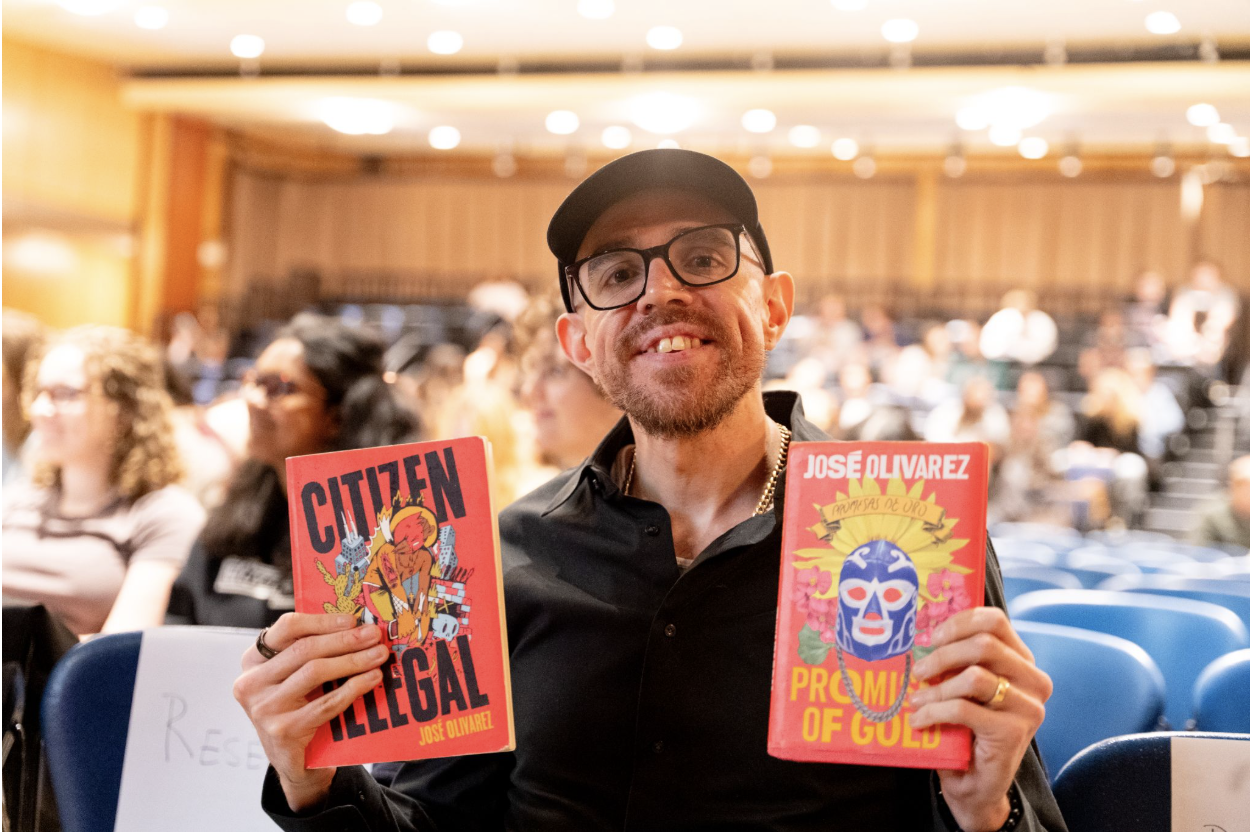
José Olivarez poses with copies of his books.
Olivarez has delivered workshops and performances across the United States and Mexico, and he brought stunning energy and passion to his keynote speech at Fordham, in which he spoke about his origins as a young poet and addressed the role of the poet in our society. For Olivarez, using writing to speak out against injustice and violence is part of the poet’s function in the world.
“Who were the writers speaking out against the war against Iraq? The writers that I found speaking out were poets,” Olivarez said. “What they were saying helped me kind of give language to my own growing political consciousness.”
Throughout his address, Olivarez read a series of poems by other poets that have inspired him, and he asked audience members to reflect on what the poems meant. He stirred up the crowd and got attendees actively involved in his speech. Students raised their hands to share with the auditorium what most stood out to them about the poems.
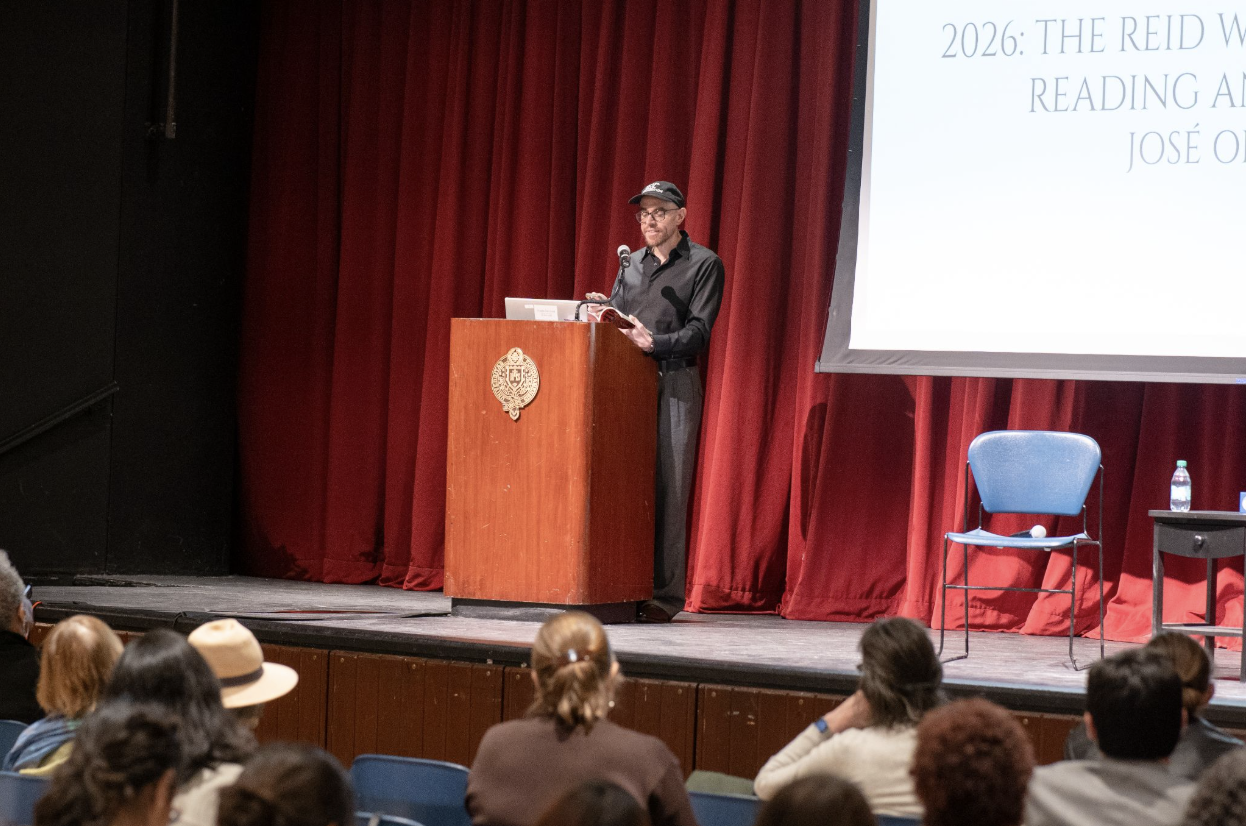
Olivarez reads from his collection, Citizen Illegal.
While Olivarez’s own work centers on politics, family, culture, and belonging, he clarified that not everyone needs to write this kind of poetry. Instead, he encouraged students to be active in the world and to work with other people to take action and reinscribe meaning into our shared language.
“Maybe you are listening to me speak, and you believe that I am making the argument that we should all be writing political poetry. I am not,” Olivarez said. “What I am arguing for is for all of us to be more present, for all of us to resist the urge to give away our thinking to whatever AI machines are being handed to us, for all of us to question the language of our government, for all of us to be present with each other, for all of us to conspire, for all of us to put the blood back into words.” This is the role of the poet, he explained.
Following his keynote address, Olivarez read some of his own work, including “I Loved the World So I Married It” from his collection Citizen Illegal and “It’s Only Day Whatever of the Quarantine & I’m Already Daydreaming About Robbing Rich People” from his second collection, Promises of Gold. Olivarez also treated the audience to a reading of some of his new poems, which have not yet appeared in a published collection.
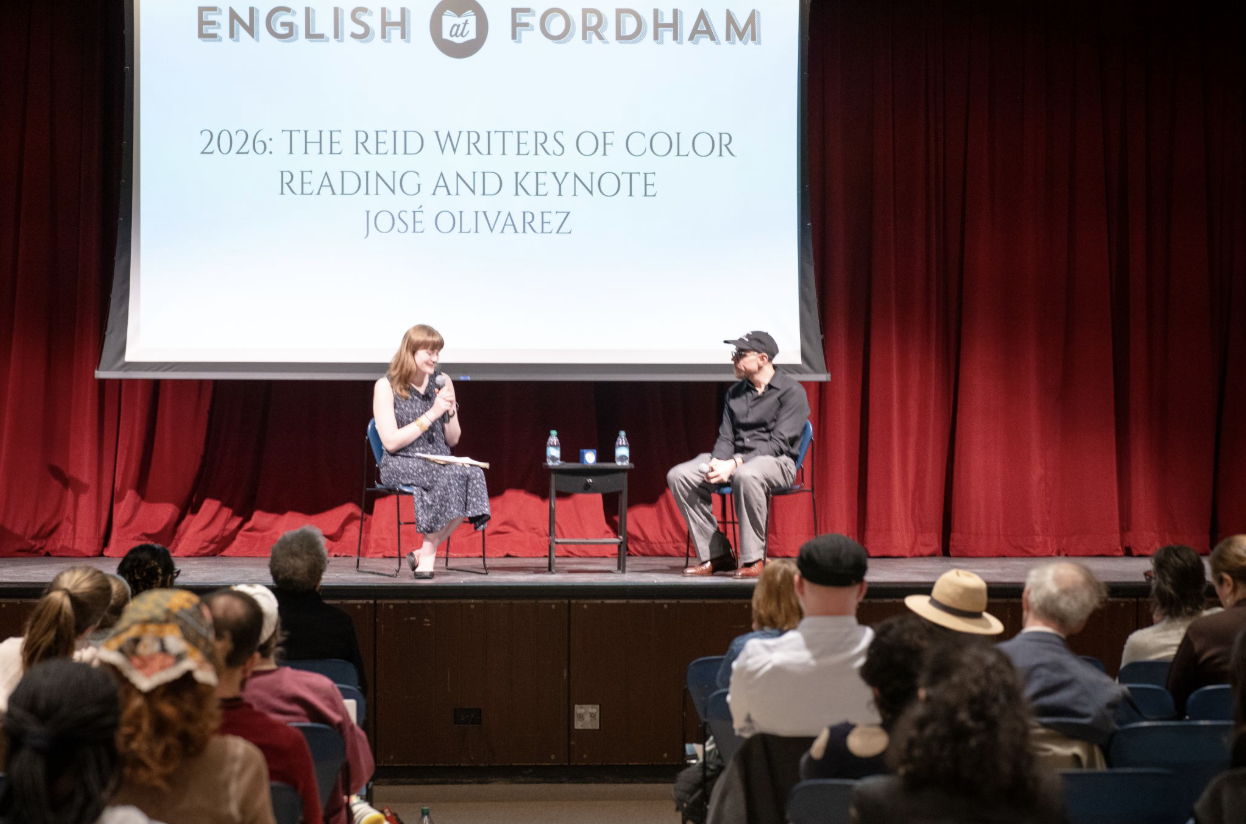
During the Q&A session, Olivarez responds to student questions.
After his reading, Olivarez sat down to answer some student questions about his work. He talked about the importance of belonging to a community of other creatives who can support you and push you to keep writing and improving new material. He also discussed his writing style and artistic inspirations, explaining that his decision to resist traditional formatting by using lowercase letters and ampersands is an inherited trait from some of his own favorite poets. Finally, he spoke to emerging writers in the room and told them the most important thing they can do to improve their craft is to read as much as possible and to learn from the writers who came before them.
Following the Q&A session, students were able to have their books signed by Olivarez. Enthusiastic chatter rippled through the book-signing line, which stretched around the auditorium, as students reflected on Olivarez’s keynote address, ready to take home with them all that they had just learned together.
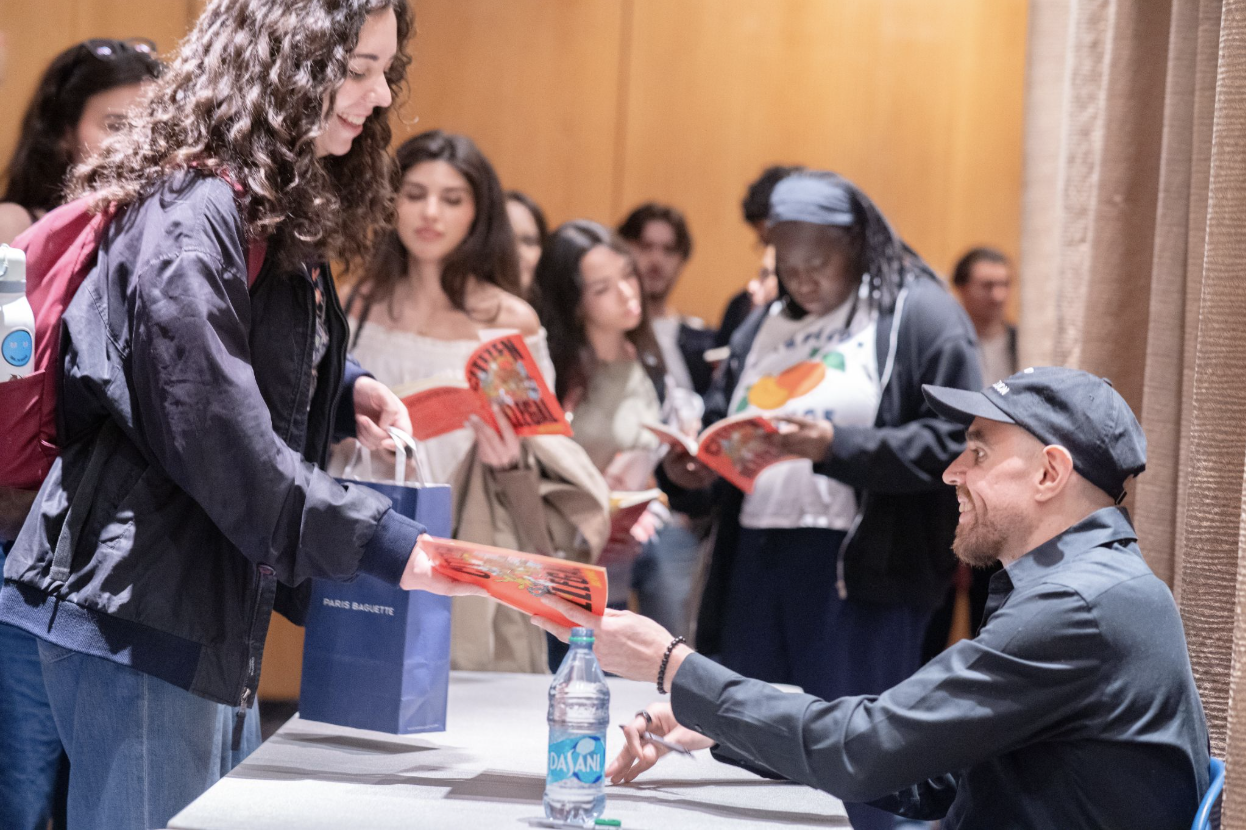
Students line up to have their books signed at the end of the event.
All photos by Tony Olivas: tony.b.olivas@gmail.com.