Authors Give Voices to Jane Austen's Forgotten Characters
This piece is by Makenzie Smith and was originally published in The Fordham Ram
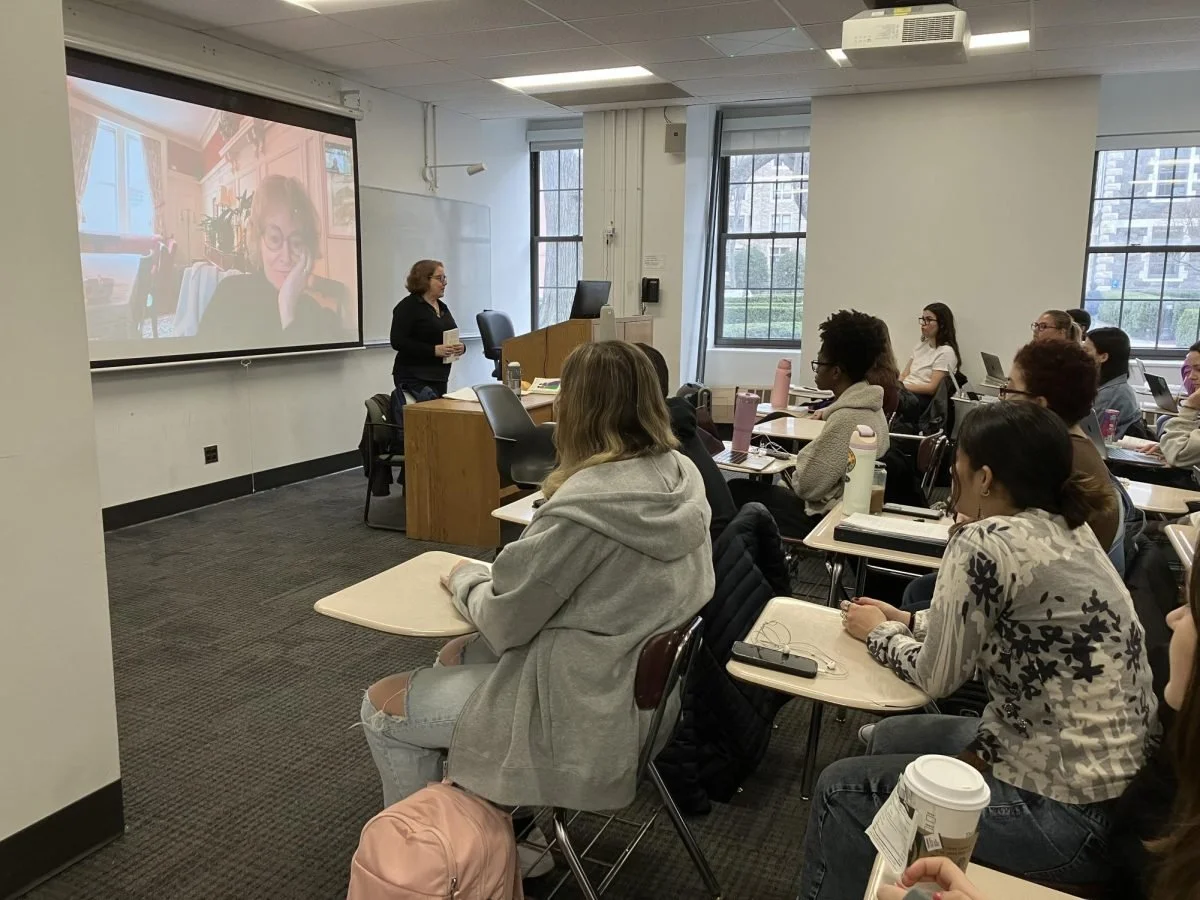
Eloisa James (left) and Karen Dukess (right) speak with Fordham students about their short stories
Jane Austen’s ladies are no longer waiting for their happy endings. In honor of the author’s 250th birthday, the publishing house Simon & Schuster set out to free Austen’s minor female characters from their confines of limited dialogue and scarce on-page presence with “imaginative reboots” of their stories. Eight authors took part in writing short stories and bound them into an anthology titled: Ladies in Waiting: Jane Austen’s Unsung Characters.
The collection of stories was released back in November 2025, but Fordham University got an inside scoop into the making of these narratives on Thursday, March 19. Two of the authors visited one of the university’s most coveted English classes, Jane Austen in Context, taught by Susan Greenfield, to discuss their writing processes and inspirations for the project.
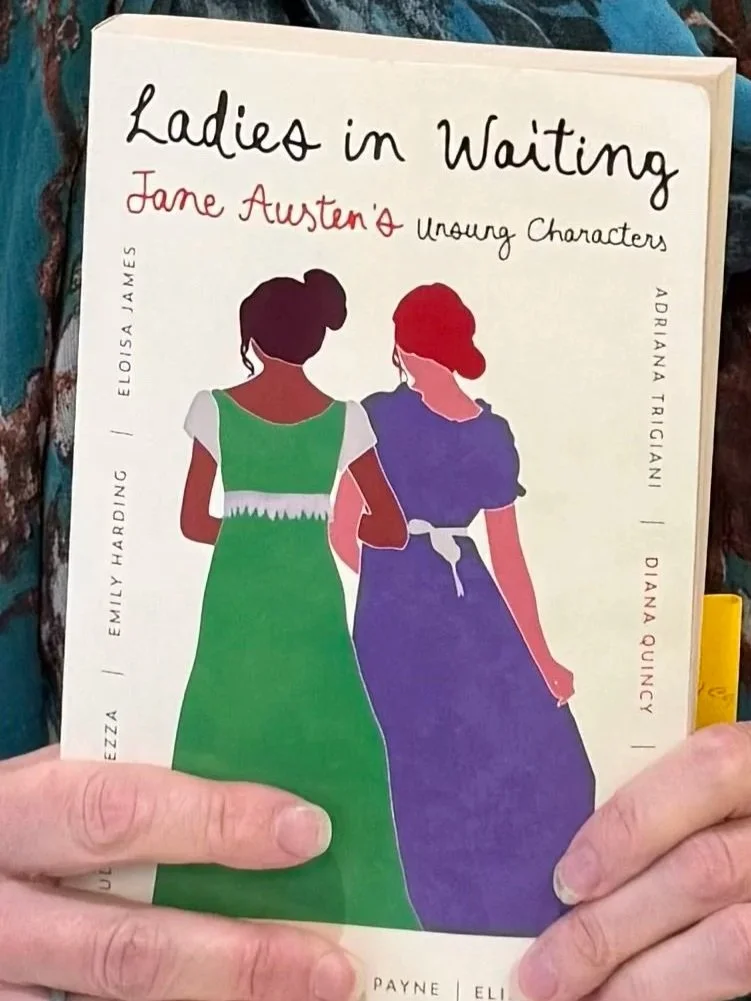
Eloisa James is a bestselling historical romance author, as well as a former Shakespeare professor at Fordham under her given name Mary Bly. Her contribution to the anthology is titled “Sense, Sensibility, and Snapdragons” and takes on Margaret Dashwood, the younger sister of the main protagonists from Austen’s “Sense and Sensibility.”
James’ inspiration for her short story began with her dubious critique of Austen’s claim on the genre. Despite Austen’s world being overtly romanticized in the modern day, James finds inconsistencies in her classic romances.
“When I read Austen, I filled in all the gaps. And I do think that she deliberately leaves spaces for you to fill in the gaps. She leaves space for your imagination to move forward into something that’s not on the page,” said James. “My feeling would be that she left space for desire and that the reader fills it in, that every page that is read is going to be different for a reader.”
In her short story, James transformed Margaret from a side character into the heroine of her own story, filling the gaps of her character. This change reflects James’ dissatisfaction with Margaret’s older sister, Marianne, being reduced into sensibility by marrying for money at the end of Austen’s novel. Instead, James wrote Margaret as a woman who refuses to be sensible by wanting something better than her sister’s marriages through a desire of adventure, true love, writing and knowledge.
Although more subdued than her other romance novels, James grants Margaret a love interest through her childhood best friend who she calls “Squibby.” The author’s writing style is usually more explicit, yet she took a step back with this project to showcase just how powerful desire can be on its own.
“Desire is much more interesting than sex itself on the page,” said James. “Desire can make everyone feel, remember times when they themselves were really desired and desiring and it’s something that young women struggle with a lot.”
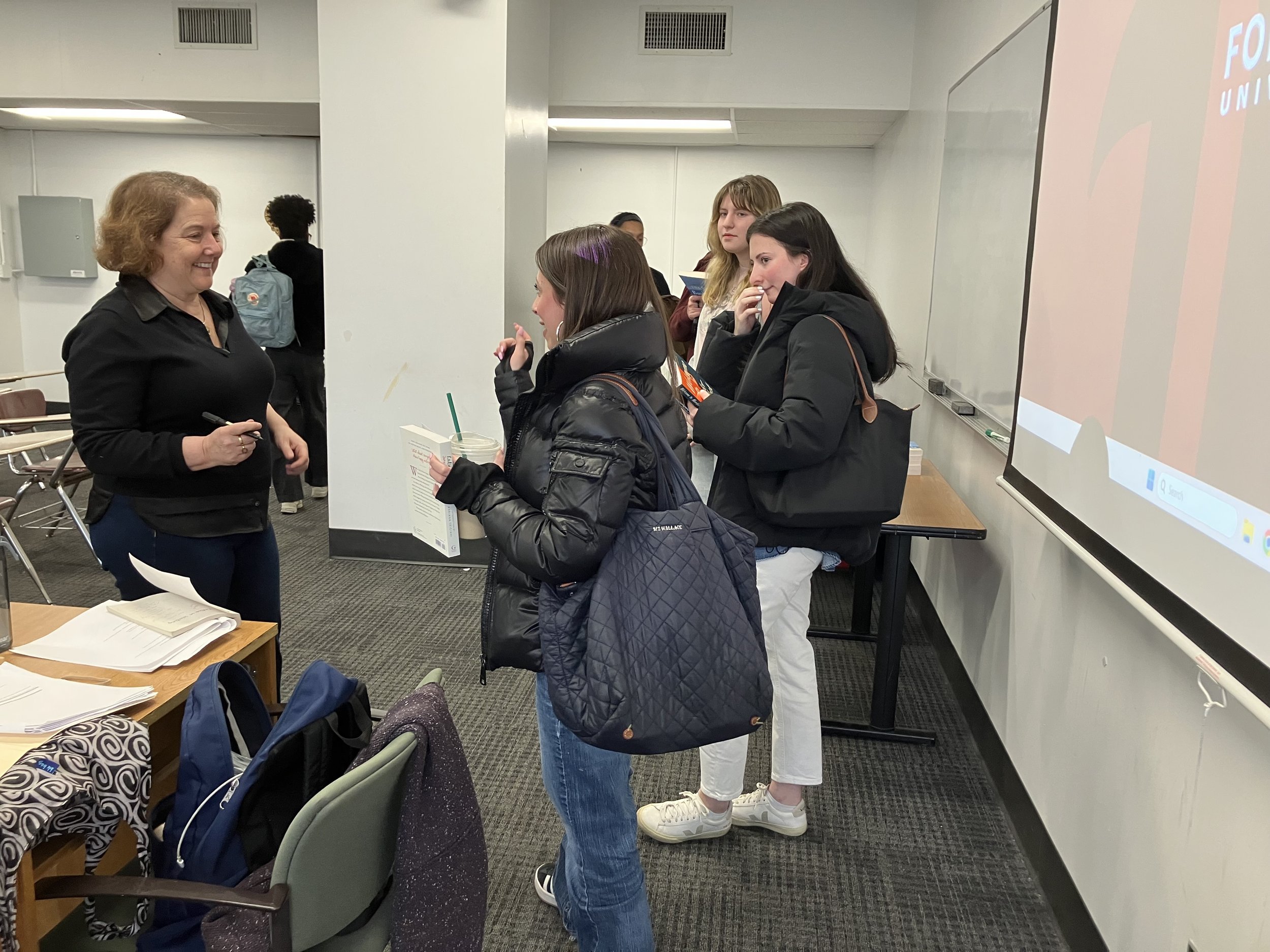
Karen Dukess chats with students eager to discuss her work
Fellow bestselling author Karen Dukess also took part in this project. She was a former newspaper reporter in Florida and a magazine publisher in Russia. Dukess similarly developed a main character out of a younger sibling from “Pride and Prejudice,” creating the story “What Georgiana Wants” based on Georgiana Darcy, the sister of Mr. Darcy.
Dukess’ short story highlights the same struggle of desire. Although the story lacks an overarching love story, Dukess matched James’ theme of yearning and spun it within a context of overflowing senses and hyperawareness of emotions. This author’s short story is a radical shift from Austen’s lack of descriptive bodily sensations. “I wanted to write about [Georgiana] as someone who didn’t know what to do with the fact that she had desire that she felt was inappropriate,” said Dukess.
A simple day in the life of a well-off married woman with two wonderful children unfolds into an exploration of a sensuous garden and an overflow of memories with another man. This day leads her to understand her raw desires. “[Georgiana] is just sort of starting to think about things differently to not just be afraid…of her own emotions and her own feelings, but to start entertaining the idea that she could have a private world of her own,” said Dukess.
A central theme of desire woven within both short stories is evident in the fact that both authors took inspiration from Austen’s world and characters, yet also took their own creative license and continued to write in their own style for the modern day audience.
James shared insights into her writing style and process, one that involves extensive planning and inspiration from other sources. “Every single character you write has got to have a huge amount of you in them, and [Margaret] has a huge amount of me,” said James. Margaret shares James’ profession and habit of being an author who narrates what goes on around her — something both the author and the character do so much that they both did so while being proposed to.
Dukess revealed that her writing process looks a bit different. She claims to be a more instinctual writer and lets the characters tell her where they want to go. She gets into the minds of her characters through what she called “play acting,” a process in which she imagines herself as both characters in the midst of dialogue.
Each story is different, yet each author used her unique skills to craft underdeveloped female characters their very own storylines, moving them out of the shadows of their older protagonist siblings.
In doing so, the anthology of Ladies in Waiting: Jane Austen’s Unsung Characters opens a space for female characters to shine no matter how minor or major they are to the stories of their counterparts. Every woman deserves to have their story told, and giving a voice to these overlooked perspectives echoes the purpose in valuing a vast number of female narratives for Women’s History Month.